


SL50 Scentinal
Air Quality Odour Monitoring Station
Perfect for keeping tabs on what's in the air around your plant or locality, the Scentinal air quality and odour monitoring station has a been designed to collect data from a variety of sensors and present the readings in an easy to understand graphical interface.





The Perfect Companion Equipment
The GD600 Gas Dilution System can be customized in order to integrate with all Scentroid Analyzers, allowing for easy and affordable calibration with this portable gas diluter.



Product Overview
The Scentinal Air Quality and Odour Monitoring Station provide high accuracy (ppb level) detection of odorous gases such as H2S, NH3, VOCs, SO2 & odour concentration. SL50’s flexible, intelligent sensor network allows live monitoring of plant odour emissions on Scentroid’s cloud servers. Scentinal’s innovative design offers the most reliable and cost-effective odour monitoring solution in the world.
Scentinal Air Quality and Odor Monitoring Station:
-
Remote monitoring based on photo-ionization detectors, non-dispersive infrared sensors, and electrochemical sensors
-
Measure common and exotic air contaminants to ppb levels
-
Cloud-based monitoring server for data collection, reporting, notification, alarms and more
-
Remotely configurable through cloud-based monitoring software
-
Automatic cleaning using a built-in ozone generator
-
Automatic server validation using built-in zero air and optional calibration air
Scentinal Basics of Operation
Mount your Scentinal to a pole, wall, or any other structure with access to power. If no power access is available, install our solar panel kit! The SL50 then serves as an air quality transmitter and refers all recorded information to you.
Log on to the web-based remote monitoring software to view readings, reports, and unit configuration. Scentinal will automatically:
-
Communicate with central servers using its SIM card
-
Monitor its own GPS position and inform the server of any changes
-
Automatically control its internal temperature using a powerful air conditioning/heating system
-
Conduct routine maintenance such as ozone-based self-cleaning and sensor validation
Poor Air Quality Index
Has your city/township/region been displaying a poor Air Quality Index (AQI) for several days in a row? Perhaps it’s time to consider finding out what’s in the air around you. Speak to Scentroid today to figure out the best solution for your space.
Cloud Server Hosting
The central monitoring station is hosted on a secure cloud-based server allowing remote access via any computer with internet access. This access is restricted and the data is encrypted for maximum security. Users are given a password and user name which will define their permission level.
Scentinal Air Quality and Odor Monitoring Station:
Scentinal Heated sampling line is used to minimize condensation and increase sample integrity and meet all EPA guidelines for emissions sampling. This additional feature can be added to your Scentinal per your request. The temperature of the air entering through the sample line is monitored using a thermocouple built into the sample line and can be accurately controlled through the temperature controller inside the cabinet.
The heated sampling line consists of:
-
3/8” PTFE Tubing core
-
Aluminum heat transfer casing
-
Electrical heating wrap
-
High-Temperature Thermal shielding
-
Aluminum heat shield
-
Foam insulation
-
Protective casing
-
K type Thermo Couple
-
An electrical connector (compatible with SL50 – Heated Sample Line controller option must be added)
Scentinal Heated Particulate Sample Inlet
A heated sample inlet for the PM1-10 sensor greatly increases the accuracy of the PM reading by eliminating water droplets and moisture from the sample. This additional feature is available for any Scentinal which has PM sensor. Temperature of the inlet can be user set to match environmental conditions using the temperature controller inside the cabinet. The actual achieved temperature is monitored using a thermocouple built into the stainless steel inner tube. The
Heated Particulate Sample Inlet module consists of:
-
Stainless steel Inner tube
-
Electrical heater
-
Stainless steel outer tube
-
Stainless steel rain cap
-
Thermo Couple
-
Temperature controller (inside the cabinet)
Scentinal Data Transmission
Data from the Scentinal Compact Air Quality and odour Monitoring Station system is processed by Scentroid’s chemical and olfactometric correlation system to determine odour impact in terms of odour units at the sensitive receptors. The Compact Air Quality and odour Monitoring Station use a neural network learning algorithm to determine odour concentration from chemical readings.
Olfactometric measurements, using the Scentroid SM100 Field Olfactometer, are collected periodically (monthly, bi-monthly, or semi-annually) and are inputted into the learning algorithm along with recorded chemical composition. This sophisticated algorithm will then create a non-linear relationship between chemical readings and odour concentration. This data is used to teach the network and enhance the accuracy of odour concentration prediction from chemical composition. The advantage of this Compact Air Quality and odour Monitoring Station over other competing technologies such as E-Noses is that chemical to odour concentration is based on routinely gathered olfactometric data and therefore is always up to date regardless of changes to the plant processes.
Should the space you are monitoring be large, it may require a series of Scentinal SL50 units to record data. Using state-of-the-art IoT (Internet of Things) software, the Scentinal unit can transfer data throughout a network of cooperating units in order to build a comprehensive data map.
NEMA4x Cabinet with Optional Air Conditioning and Heating
Each Compact Air Quality and odour Monitoring Station is enclosed in a NEMA4x cabinet. This standard package allows the station to operate within an ambient air environment of between 4 and 35 degrees Celsius. Optionally each Station can be equipped with the following cooling and heating systems to keep the unit at optimal temperature and humidity:
• Air Conditioning System for temperatures between 35 and 50 degrees C
• Heating System for temperatures between +4 and -50 degrees C
• Combined Air Conditioning and Heating System
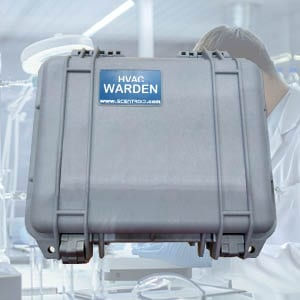
The HVAC system has an automated thermostat and smart power management system. The sensor network reports on the temperature and humidity of the cabinet to warn of any HVAC failures. Furthermore, each station has a hardware shut-off feature to prevent over-temperature failure if the temperature inside the cabinet exceeds 50 degrees C or goes below -50 degrees C due to HVAC failure.
Dimensions and Weight
24″ x 20″ x 8″ x 81 lbs
Sensors
-
Maximum Sensors: Up to 13, including pressure, temperature, relative humidity, GPS.Type of Sensors: PID, NDIR, EC, laser particulate counter
Scentinal Package Includes
-
Communicate with central servers using its SIM card
-
Monitor its own GPS position and inform the server of any changes
-
Automatically control its internal temperature using a powerful air conditioning/heating system
-
Conduct routine maintenance such as ozone-based self-cleaning and sensor validation
Communications
Communication: 3G / 4G (default) LAN (default) WiFi (optional)
On-Board Data Storage: 64GB SD Card
Cloud Server: Included by default
Local Server: Optional
On-Board Server: Included by default
User Interface: 7″ touch screen on panel door and remote access to SIMS (Sensor Information Management System)
Software: Free access to SIMS for the life of the product
Temperature
Temperature Range: 0 to 35 °C without an AC unit installed
Temperature Range with AC unit: -50 to 50 °C with heating and AC
Sample Conditions Without Pre-Dilution System: -50 to 50 °C and 10 to 90% RH
Sample Conditions With Pre-Dilution System: -50 to 120 °C and 0 to 100% RH
Calibration
-
Standard: Factory calibration to fully documented procedures in accordance with our ISO 9001 quality management system
Manual Calibration: Using calibration gas and on-board screen
Automatic Calibration: Optional, using built-in calibration gas
Warranty
Warranty: 24 months full warranty on all parts including sensors
Sensor Replacement: Sensor dependent; the first 2 years are covered by a warranty
Hardware
Cabinet: NEMA 4X
Mounting Hardware: Wall mounting hardware Included
Power
Power Requirements: 100-240 v 50/60 Hz 2APower Consumption: 30w without AC unit. 150w with AC unit.
Sampling
Sampling Rate: Adjustable from 1/s to 1/mSampling Ports: 1 to 2